Who Are the Top Exterior LED Lighting Suppliers in China?

Exterior LED Lighting has moved from a simple energy-saving choice to a detailed design decision. Buyers now compare optical control, corrosion resistance, thermal management, warranty terms, and long-term serviceability. A coastal promenade needs sealed fixtures that resist salt and moisture. A warehouse entrance needs clear visibility without harsh glare. Small details matter.

The U.S. Department of Energy’s Energy Saver guidance says LEDs use at least 75% less energy and can last up to 25 times longer than incandescent lighting. These figures provide useful context, but they do not guarantee equal performance across outdoor products. Fixture design, operating conditions, and installation quality still shape real-world results. Lighting researcher Dr. Mariana Figueiro’s published work supports a people-centered approach to lighting; put plainly, outdoor light should serve visibility and comfort, not brightness alone. This is a paraphrase, not a verbatim quotation.

That distinction matters when comparing China’s exterior LED lighting suppliers. A polished product page is not proof of consistent quality. Buyers should examine test documentation, component traceability, sample-build accuracy, and support after delivery. Ask how the supplier controls glare and manages heat. Request evidence for ingress-protection claims. Then check whether the production sample matches the specification. There is no perfect shortlist. Supplier capabilities change, and public information can be incomplete. This guide will assess leading candidates through product range, manufacturing evidence, certifications, customization, and export support—while treating unsupported claims with caution.
Who Are the Top Exterior LED Lighting Suppliers in China?

China’s Exterior LED Lighting Market: Product Types and Core Applications

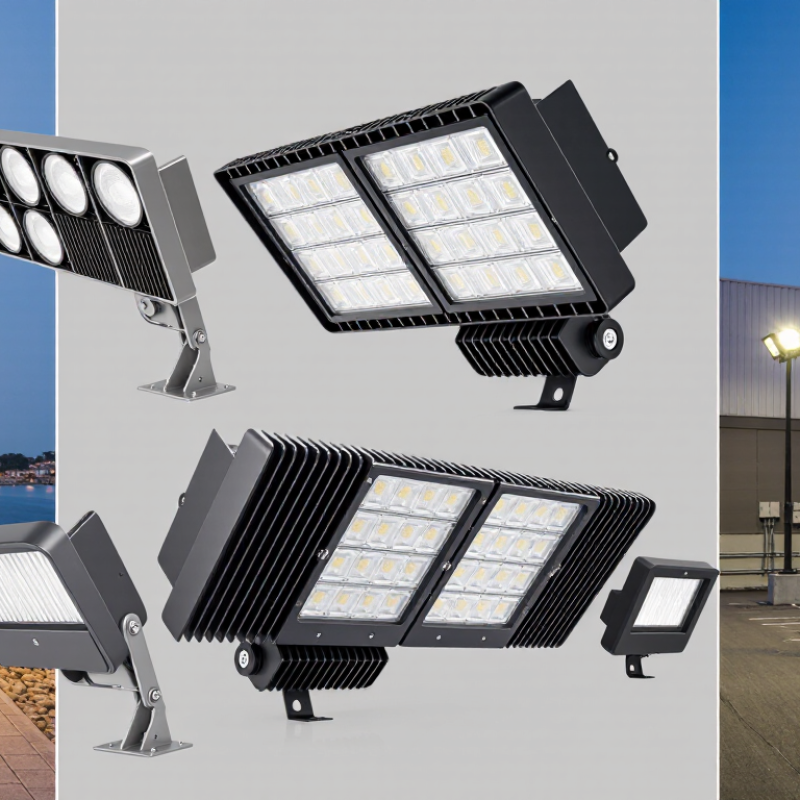
China’s exterior LED market covers street and roadway luminaires, floodlights, tunnel lights, landscape fixtures, and solar-integrated units. Each serves a different setting. Road lights need controlled beam distribution to limit glare and dark patches. Floodlights suit yards, loading zones, and building exteriors, where mounting height changes the required optics. Tunnels add another challenge: lighting must transition safely between bright entrances and darker interiors. Details matter. A catalogue description alone cannot show how a fixture performs on site.

Core applications include municipal roads, bridges, ports, industrial compounds, parks, and commercial façades. The International Energy Agency’s Energy Efficiency 2023 report estimates that lighting accounts for about 15% of global electricity use and 5% of greenhouse-gas emissions, making efficient design consequential. The U.S. Department of Energy reports that LEDs use at least 75% less energy than incandescent lighting, though that comparison does not predict savings for every outdoor project. Buyers should check photometric files, ingress protection, thermal management, and warranty terms against actual conditions. Coastal salt, dust, vibration, and long operating hours can expose weaknesses quickly. Still, a specification sheet is not the installation. The gap between paper performance and field results deserves careful review.

Supplier Evaluation Metrics: Efficacy (lm/W), L70 Life, and IEC 60598

When comparing exterior LED lighting suppliers in China, look beyond headline efficacy figures. Ask for luminaire-level output in lumens per watt, measured at the specified color temperature, drive current, and optics. A bare LED-chip rating does not include losses from drivers, lenses, or thermal management. Request a test report for the exact fixture configuration you plan to buy. Numbers need context.

L70 estimates when light output is expected to reach 70% of its initial level. Check the stated hours, ambient temperature, and operating conditions. Ask how the estimate was developed and whether supporting LED package data is available. A hot fixture housing on a summer evening can affect performance; package data alone may not reflect the complete luminaire. Estimates are useful, but they are not guarantees.

Tips: Compare like with like. Request the IEC 60598 test documentation for the relevant luminaire type, and confirm the tested model matches the quotation. Review safety details such as ingress protection, wiring, and thermal performance alongside the report. Documentation can look convincing while describing a different configuration, so verify model codes and revisions. One overlooked detail can matter.

Who Are the Top Exterior LED Lighting Suppliers in China?

A practical screening framework using efficacy, L70 rated life, and IEC 60598 documentation—not a supplier ranking.

Efficacy

Compare delivered luminaire efficacy in lm/W, not LED-chip efficacy. The chart shows indicative procurement screening bands, not measured supplier results.

L70 rated life

Request the rated hours to L70 and the supporting test conditions. A 50,000-hour target is a suggested screening criterion, not a universal requirement.

IEC 60598 documentation

Check applicable IEC 60598-1 general requirements and, for road and street lighting, IEC 60598-2-3. Verify reports for the offered luminaire model.

Leading Chinese Supplier Profiles: Street, Flood, Landscape, and Façade Lights

Chinese exterior LED suppliers often build separate product lines instead of relying on one fixture for every project. Street-light specialists should discuss pole height, road width, optics, and spacing. Request a photometric file, not just a lumen figure. Floodlight makers serve yards, sports areas, and building walls. Compare beam angles, glare control, heat management, and outdoor sealing. Small details matter.

Landscape-lighting suppliers may offer bollards, spike lights, and in-ground fixtures. Check drainage, cable entry, and whether parts can be replaced. Façade-lighting teams may supply linear bars, wall washers, or compact projectors. Ask for beam drawings and a night-time mock-up. Confirm finish options and corrosion resistance for coastal or humid sites. A sample can look excellent, yet installation details may disappoint. Check them early.

Tips: Request test reports, warranty terms, and spare-part availability. Verify the stated ingress rating suits the installation, and compare light output with your project needs. Ask how the supplier handles dimming and driver replacement. A clear answer is useful; vague promises are not.

Comparing Suppliers by IEC 60529 IP Ratings, IK Ratings, and Surge Protection

Who Are the Top Exterior LED Lighting Suppliers in China?

For outdoor luminaires, compare suppliers by evidence, not catalog claims. IEC 60529 IP ratings describe protection against dust and water. IP66, for example, indicates dust-tight construction and protection against powerful water jets under defined test conditions. It does not guarantee safe immersion or prevent every leak after years outdoors. Ask whether the rating applies to the complete assembled luminaire, including cable glands and entry points. Details matter.

IK ratings measure resistance to mechanical impact under IEC 62262. An IK10 test represents impact energy of 20 joules, useful for fixtures exposed to public areas or accidental knocks. Request the test report and confirm the tested model matches the proposed housing, lens, and mounting arrangement. A strong rating on one component may not describe the finished product. This is easy to miss.

Surge protection deserves a separate comparison. Ask suppliers for the protection level in kilovolts, the test basis, and whether protection is built into the driver or supplied separately. Check both differential-mode and common-mode performance where relevant, plus replacement options after a surge event. Request samples and inspect seals, connectors, and mounting hardware before approval. Paperwork helps, but field conditions can be less tidy than a test bench.

Procurement Checks: LM-80/TM-21 Evidence, Warranty Terms, and Export Experience

Who Are the Top Exterior LED Lighting Suppliers in China?

For exterior LED procurement, ask suppliers for complete LM-80 test reports, not a one-page certificate. Check the tested LED package, drive current, and temperature conditions against the proposed fixture. TM-21 uses LM-80 data to project lumen maintenance; it does not prove the lifetime of an entire luminaire. The IEA’s Energy Efficiency 2023 report estimates that lighting uses about 15% of global electricity, making credible performance evidence more than paperwork. Still, evidence can mislead.

Read the warranty line by line. Confirm its term, coverage for LED modules and drivers, lumen-maintenance criteria, and the process for claims from overseas. Ask who pays freight for replacements and whether labor is covered. A five-year promise means little if exclusions are vague. Get the answers in writing.

Export experience should show up in practical details: documented shipment history, consistent product labels, export packaging, and clear installation instructions. Request sample documents with sensitive customer information removed. Check whether the supplier can explain how it protects coastal fixtures from salt spray and seals cable entries against water. A useful check is to compare these details with the project specification, not just a sales sheet. I would not treat a polished file as proof; independent review may still be worth the time.