
Why Choose LED Linear Lighting for Commercial Spaces?
Commercial lighting shapes how people move, work, and judge a space. In offices, shops, and hotel corridors, a continuous line of light can make ceilings feel orderly and work surfaces easier to see. Led Linear Lighting is popular for its clean appearance, flexible layouts, and compatibility with modern controls. But a sleek profile alone does not guarantee good results.
Lighting designer Richard Kelly is associated with the phrase, “Light is the fourth dimension of architecture.” His idea is a useful lens for evaluating linear fixtures: light should support the space, not merely decorate it. A well-planned system can guide visitors through a hallway, reduce dark patches above a counter, and provide even illumination across desks. Small details matter. Glare, color consistency, dimming performance, and driver access can all affect daily comfort and maintenance.
This article explores why businesses choose Led Linear Lighting, where it works well, and what to check before installation. Fixture spacing, ceiling height, surface reflectance, and the task at hand should shape the design. A bright showroom may need a different layout from a quiet meeting room. And linear lighting is not automatically the right answer everywhere. Poorly selected optics or excessive brightness can make a polished space uncomfortable. Careful planning, product data, and an on-site review help turn a neat line on a drawing into lighting that works in real life.
What Is LED Linear Lighting?
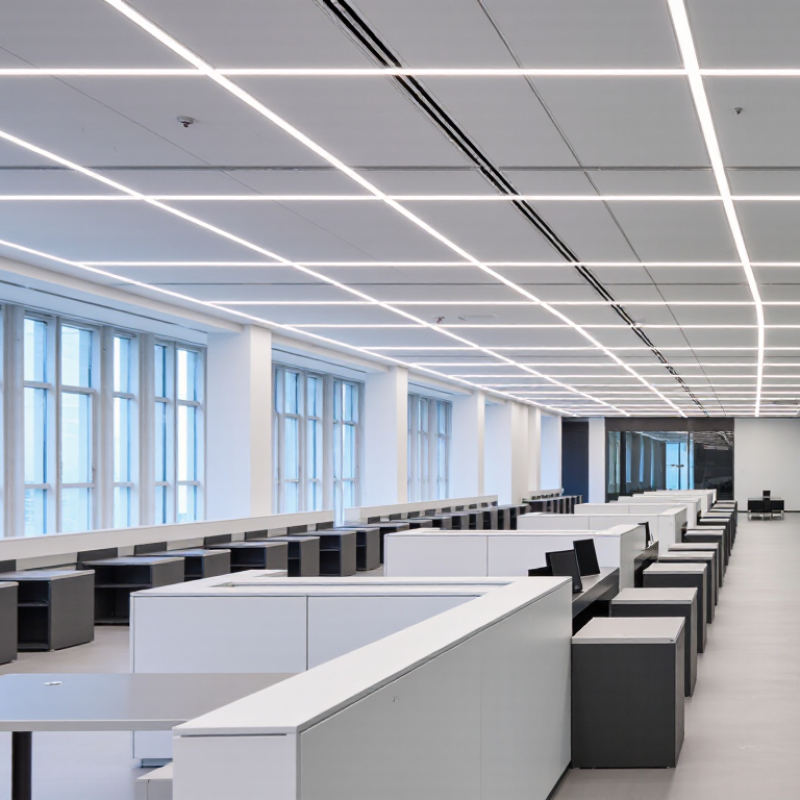
LED linear lighting is a luminaire with an elongated profile and a row of light-emitting diodes inside. The fixture typically combines LED boards, a driver, a housing, and an optical cover or lens. That lens helps shape the light and soften visible points. Linear describes the form, not one fixed design.
Fixtures may be recessed into a ceiling, surface-mounted, or suspended above desks and worktables. Some connect end to end, creating a continuous line; others work as separate units. Light can be directed downward, upward, or both. The differences matter: a lens that reduces glare may also change brightness, while a narrow beam can leave darker patches between fixtures. The term can be a little fuzzy.
The U.S. Department of Energy reports that LED bulbs use at least 75% less energy and can last up to 25 times longer than incandescent bulbs. Those figures describe LEDs generally, not every linear luminaire. Output, driver performance, controls, and installation all affect real results. The IEA’s Energy Efficiency 2023 report estimates lighting uses about 15% of global electricity. That broader figure explains why efficient fixtures draw attention, but it does not prove one shape is best for every room. A useful specification checks light output, glare, color quality, and expected operating hours together.
How LED Linear Lighting Works
LED linear lighting creates a continuous-looking strip of light from many small LED chips mounted along a circuit board. When electrical current passes through each semiconductor, it produces light. A driver converts incoming mains power into controlled current, helping the LEDs operate steadily rather than flicker with every change in supply.
Inside a commercial fixture, the driver, LED board, and optics work together. A diffuser softens the points of light, while a reflector or lens directs it onto desks, shelves, or walkways. Some light is lost in the diffuser; that trade-off is easy to overlook. The aluminum housing helps move heat away from the LEDs, which supports stable performance over time. It still needs sensible installation and airflow.
For example, a suspended fixture above a meeting table can spread light along the table’s length, reducing dark patches between seats. Dimming depends on the driver and control system being compatible. A mismatch may cause uneven dimming or flicker. Check output, color temperature, glare ratings, and control requirements against the actual room. Specifications matter. In practice, the ceiling height and surface finishes can change how bright a space feels, so a sample installation may reveal details a drawing misses.
Key Benefits for Commercial Spaces
LED linear lighting can make commercial spaces feel brighter without filling ceilings with bulky fixtures. Its long, even light distribution works well over desks, checkout counters, and narrow aisles. Fewer dark patches can help staff read labels and customers navigate more comfortably. Less glare matters. Choose optics and mounting positions carefully, since a poorly placed fixture can still shine directly into someone’s eyes.
Efficiency is another practical benefit. LEDs generally use less electricity than many older lighting systems, though actual savings depend on operating hours, controls, and the equipment being replaced. In a busy office or retail space, occupancy sensors and dimming can reduce energy use when daylight is sufficient or rooms are empty. Compare measured output, efficacy, color rendering, and rated lifetime before selecting fixtures. A long rated life is useful, but heat, dust, and driver quality affect real-world performance.
Linear fixtures can also create a consistent visual rhythm across open ceilings and corridors. That can make a space easier to adapt when furniture or displays move. Still, uniformity is not always the goal; a reception desk may need focused light, while a lounge benefits from softer levels. Check samples in the actual room when possible. Product data alone can miss how finishes, ceiling height, and daylight change the result.
Common Commercial Applications
LED linear lighting suits spaces where light must reach long surfaces evenly. In open offices, continuous rows can reduce the patchy effect of isolated fixtures over desks. In retail aisles, slim runs help illuminate shelves and floor paths without bulky housings. The U.S. Energy Information Administration’s 2018 Commercial Buildings Energy Consumption Survey attributes about 17% of commercial-building electricity use to lighting. That makes fixture selection relevant to operating costs, though actual savings depend on controls, hours, and existing equipment.
Warehouses and service corridors benefit from linear fixtures with suitable output and distribution. Higher mounting heights may need a different optic than a low ceiling. In schools and healthcare facilities, diffused light can help limit harsh brightness over desks, counters, and waiting areas. Details matter. A bright fixture can still create glare on glossy floors or computer screens.
The U.S. Department of Energy notes that LEDs use at least 75% less energy than incandescent lighting and last up to 25 times longer. This comparison is not a direct measure of savings against existing commercial fluorescent systems. For a retrofit, check measured light levels, color quality, dimming compatibility, and maintenance access. A mock-up in one room often reveals problems the drawings miss. One detail is easy to overlook: a control system may be too complex for daily use.
| Commercial Application | Common Locations | Typical Lighting Priorities | Why LED Linear Lighting Fits | Common Correlated Color Temperature (CCT) | Useful Controls |
|---|---|---|---|---|---|
| Offices | Open-plan work areas, meeting rooms, corridors, and reception areas | Comfortable, even illumination; reduced glare; clear visibility for screen and paper tasks | Continuous rows or suspended fixtures can provide consistent light across desks and circulation areas. | 3500–4000 K | Dimming, occupancy sensing, and daylight-responsive control |
| Retail Stores | Sales floors, shelving aisles, checkout counters, and display areas | Good product visibility, accurate color appearance, and adaptable lighting for different zones | Linear fixtures can run along aisles, integrate with shelving, and support both general and accent lighting layouts. | 3000–4000 K; higher color-rendering performance may be specified where color accuracy matters | Dimming and separately controlled display or sales-floor zones |
| Warehouses and Distribution Centers | Storage aisles, picking areas, packing stations, and loading zones | Useful light levels on floors and work surfaces, dependable operation, and efficient coverage of long aisles | Linear high-bay or aisle-oriented layouts can distribute light along racks and work areas. | 4000–5000 K | Occupancy or aisle sensing, daylight harvesting, and scheduled dimming |
| Schools and Educational Facilities | Classrooms, libraries, laboratories, corridors, and common areas | Uniform illumination, visual comfort, and suitable light for reading, writing, and screen use | Surface-mounted, recessed, or suspended linear fixtures can create orderly layouts across desks and shared spaces. | 3500–4000 K | Dimming, occupancy sensing, and daylight-responsive control near windows |
| Healthcare and Clinical Spaces | Consultation rooms, examination areas, corridors, and staff work areas | Consistent illumination, easy-to-clean fixture designs where required, and appropriate color rendering for the task | Continuous, evenly distributed lighting can reduce dark gaps in corridors and support clear visibility in work areas. | 3500–4000 K; select color-rendering specifications according to the clinical task | Dimming and separate controls for clinical, circulation, and support areas |
| Hospitality and Restaurants | Dining rooms, hotel corridors, reception areas, and back-of-house workspaces | Comfortable ambient light, flexible scenes, and distinct lighting for guest and staff areas | Linear fixtures can provide discreet ambient illumination or define architectural features and circulation routes. | 2700–3500 K in guest-facing areas; 3500–4000 K in work areas | Dimming and scene control for changing activities and occupancy |
| Parking Garages and Transit Areas | Parking levels, pedestrian routes, stairwells, and covered loading areas | Reliable visibility, uniform coverage, and reduced energy use during low-occupancy periods | Linear runs suit long bays and routes, helping provide continuous illumination across circulation areas. | 4000–5000 K | Occupancy sensing, dimming, and scheduled control |
CCT values are common starting points, not fixed requirements. Final lighting levels, color rendering, glare control, fixture layout, and controls should be selected for the space, tasks, applicable standards, and local codes.
Factors to Consider When Choosing LED Linear Lighting
Choosing LED linear lighting starts with the work happening beneath it. A checkout counter, open office, and warehouse aisle need different light levels and beam distributions. Check the fixture’s lumen output, spacing, and mounting height together; a bright fixture can still leave dark patches if the rows are poorly placed. On a ceiling plan, mark desks, shelves, and screens before selecting lengths. Details matter.
Color quality affects how spaces and materials appear. A color temperature around 3000K may feel comfortable in hospitality areas, while 3500K or 4000K often suits offices and retail displays. Compare color rendering as well, especially where accurate product colors matter. Ask for photometric data, not just a lumen figure. Review glare control in rooms with computer screens, and check whether dimming works with the intended control system. Compatibility is easy to overlook.
Installation and upkeep deserve equal attention. Confirm ceiling type, wiring access, fixture dimensions, and whether continuous runs need special connectors. In kitchens or other damp areas, verify the fixture’s stated environmental rating. Compare energy use, expected service life, driver replacement options, and warranty terms. Higher output is not always better; excess brightness can waste energy and make a room uncomfortable. The right balance may take a mock-up or an adjustment after installation. That is not a failure; it is useful feedback.
Related Posts
-
Unlocking Energy Efficiency with Best Led Linear Lighting Solutions for Global Buyers
-
7 Essential Insights for Sourcing LED Linear Lighting Efficiently
-
How to Choose the Right Led Linear Lighting for Your Space
-
How to Source High Quality Long Led Light Suppliers for Global Markets
-
Addressing the Challenges of Finding the Best Shop Lights for Your Workspace
-
7 Compelling Reasons to Choose the Best LED Shop Lights for Your Business