What Are the Best LED Shop Lights for Global Buyers?
Choosing the Best Led Shop Lights for global buyers requires more than comparing brightness and price. A workshop in Germany may need 230 volts, while a warehouse in North America commonly uses 120 or 277 volts. Installation standards, beam distribution, color temperature, and warranty support also vary by market. The right fixture must perform reliably above workbenches, aisles, and storage racks.
Industry data supports the shift toward efficient lighting. The International Energy Agency’s Energy Efficiency 2023 report identifies lighting as a major global electricity-use category. Its tracking reports also show that LED technology has become dominant in new lamp sales. The U.S. Department of Energy’s solid-state lighting research highlights continuing improvements in efficacy, thermal management, and product life. These findings matter in practical terms. A well-designed LED shop light can reduce replacement work, lower energy consumption, and provide clearer visibility over a crowded bench.
Still, efficiency numbers can mislead. Some products claim impressive lumens but use weak drivers, poor heat sinks, or vague testing methods. I have seen fixtures that looked bright on day one, then developed flicker and darkened corners. Buyers should check tested efficacy, power factor, operating temperature, certification marks, and photometric files. ENERGY STAR and DesignLights Consortium resources can help verify performance, where applicable. No single fixture wins everywhere. Global buyers must balance compliance, local voltage, installation conditions, service availability, and real user experience before choosing a dependable solution.
Understanding LED Shop Lights and Their Main Applications
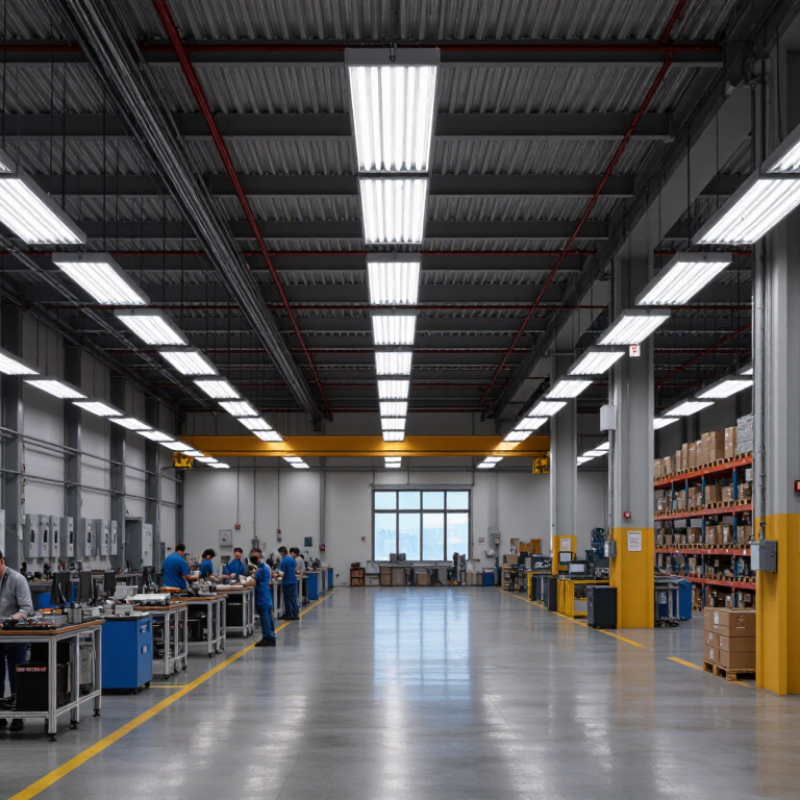
LED shop lights are linear fixtures designed for broad, practical illumination. They often use LED boards, aluminum housings, and diffusers to spread light across work areas. Unlike decorative lamps, they prioritize visibility, efficiency, and long operating hours. A well-chosen fixture can reduce dark patches above benches or storage aisles.
Their applications vary by working environment. In a garage, a 4000K to 5000K color temperature can reveal tool edges and surface marks clearly. Workshops may need stronger output, especially above detailed assembly tables. Warehouses benefit from wide beam angles and suspended layouts. Retail back rooms often need simple, uniform lighting rather than extreme brightness. Damp areas require suitable ingress protection ratings. Check this carefully.
Global buyers should examine input voltage, mounting methods, dimming compatibility, and local electrical requirements. Certification needs also differ between markets, so supplier documents deserve careful review. I have seen buyers compare wattage alone and overlook light distribution. That mistake can create glare, shadows, and wasted energy. It is also wise to confirm operating temperature ranges for unheated warehouses or hot workshops. Specifications can look convincing. Real conditions may disagree. Be practical, and request test data before placing a large order.
What Are the Best LED Shop Lights for Global Buyers?
Typical target illuminance levels for common LED shop light applications
Higher illuminance is generally required for tasks involving greater visual detail. Storage areas typically need lower light levels, while workshops, retail spaces, and inspection areas require progressively brighter and more uniform lighting. Actual requirements depend on local regulations, ceiling height, layout, surface reflectance, glare control, and the specific task. Values shown are representative targets based on commonly used international workplace-lighting guidance.
Reference framework: common EN 12464-1 and CIE workplace-lighting recommendations; applicable local standards should be checked before installation.
Comparing LED Shop Light Types, Sizes, and Brightness Levels
What Are the Best LED Shop Lights for Global Buyers?
Comparing LED Shop Light Types, Sizes, and Brightness Levels
LED shop lights differ in construction, coverage, and light output. Integrated linear fixtures offer cleaner installation and fewer loose parts. LED tube systems can simplify replacement, but compatibility must be checked carefully. Vapor-tight fixtures suit dusty or damp workshops. A two-foot light fits shelves and narrow benches. Four-foot models usually cover standard work areas. Eight-foot fixtures can reduce dark gaps in larger spaces.
Choose lumens, not watts, when comparing brightness. A typical four-foot fixture may produce 4,000 to 6,000 lumens. For detailed bench work, around 500 lux is a practical starting point, though ceiling height changes the result. The U.S. Department of Energy’s 2023 Solid-State Lighting R&D report identifies over 200 lumens per watt as a future performance target. That is not today’s normal buying standard. The IEA’s Energy Efficiency 2023 report also notes that LED lighting can use at least 75% less energy than incandescent lighting.
Tips: Measure the room first. Then map shadows, mounting height, and work surfaces. Select 4000K to 5000K for a neutral, alert appearance. CRI 80 is acceptable; higher CRI helps with color-sensitive tasks. Review photometric files when available. I once overestimated brightness by reading lumens alone. Spacing mattered more than expected. Dimming can help, but only when the driver, control system, and local voltage are compatible.
Evaluating Energy Efficiency, Lifespan, and Light Quality
What Are the Best LED Shop Lights for Global Buyers?
For global buyers, energy efficiency starts with useful light, not wattage alone. I compare lumens per watt, power factor, and actual illumination at the workbench. A 40-watt fixture may look efficient, yet poor distribution can leave dark shelves and wasted light. In a typical workshop, I measure brightness at several points, including corners and under storage racks. Small differences become obvious after a full shift.
Lifespan deserves careful reading. A claimed 50,000-hour rating often refers to L70, meaning light output may fall to 70 percent. Heat, dust, frequent switching, and unstable voltage can shorten that figure. Fixtures with effective heat dissipation usually perform more consistently. Buyers should check testing evidence, operating temperatures, and replacement support. I once selected a high-output model that became noticeably dimmer near a warm ceiling. The specification looked excellent, but the installation conditions were ignored.
Light quality affects accuracy and comfort. A CRI above 80 suits general storage, while higher CRI helps with paint, wiring colors, and product inspection. Neutral white light around 4000K to 5000K often balances clarity and reduced eye strain. Flicker should also be tested, especially on camera or around moving machinery. Some products passed basic checks but still felt tiring after several hours. That experience changed my evaluation method: measured efficiency matters, but human comfort needs real observation.
Checking Global Safety Standards, Voltage, and Installation Requirements
What Are the Best LED Shop Lights for Global Buyers?
Choosing an LED shop light begins with safety, not brightness. IEC 60598-1 specifies general safety requirements for luminaires, including insulation, wiring, and mechanical protection. Buyers should also verify market-specific conformity marks and testing documents. A certificate without a traceable test report is weak evidence.
Voltage is not universal. A warehouse in North America may use 120 or 277 volts, while many facilities in Europe and Asia use 220–240 volts. Check the input range, frequency, grounding method, and plug type before ordering. A wide-range driver, such as 100–277 V, can simplify international projects, but it still needs correct installation. The U.S. Department of Energy reports that LED lighting can use at least 75% less energy and last up to 25 times longer than incandescent lighting. Efficiency helps, but poor wiring can erase the benefit.
Installation details deserve equal attention. Confirm ceiling height, mounting brackets, junction-box compatibility, emergency-lighting rules, and ambient temperature. In dusty workshops, an appropriate IP rating helps protect against particles and moisture. IEC 60529 defines these IP protection levels. Small labels matter. Review lumen output, color temperature, power factor, surge protection, and dimming compatibility. The DOE’s solid-state lighting research reports have documented laboratory LED efficacies above 200 lumens per watt, yet real fixtures perform lower after drivers, lenses, and heat losses. That gap deserves honest checking.
Choosing the Best LED Shop Lights for Different Buyer Needs
The best LED shop light depends on the work, room, and buyer’s local conditions. A small garage may need 4,000 to 6,000 lumens, while a warehouse often needs more fixtures with wider coverage. Measure the ceiling height and workbench area before comparing products. Brightness alone can mislead buyers.
For detailed repairs, choose a color temperature near 4,000K to 5,000K and a high color rendering index. This helps reveal paint shades, wiring colors, and surface defects. A workshop with dust or moisture needs suitable ingress protection and a sealed housing. Check local electrical certifications, voltage compatibility, plug type, and installation rules before ordering internationally. These details can prevent costly returns.
Mounting style also reflects different buyer needs. Linkable lights suit long benches, while suspension fixtures work better in tall spaces. Look for flicker control when cameras, rotating tools, or precision tasks are involved. I once selected lights by lumen output alone, then noticed harsh shadows under the shelves. That choice was technically bright but practically weak. Buyers should inspect beam distribution, warranty terms, heat management, and replacement access. No specification sheet replaces testing the light at the actual work surface.
Related Posts
-
Finding Reliable Suppliers for Into Led Lighting Top Tips for Global Buyers
-
Maximizing Energy Efficiency with Led Bulbs in Your Home and Business
-
Unveiling the Power of 200W Led Bay Lights for Maximum Efficiency and Longevity
-
Smart Solutions for Global Buyers: Maximizing Efficiency with LED Lamps in Your Supply Chain
-
Revolutionizing Home Illumination with Smart LED Lights for Energy Efficiency and Style
-
Top 10 Benefits of Choosing Led Lighting Supply for Your Business?