
Top 10 HDPE Liner Manufacturers in China
China has a broad market for HDPE geomembranes, serving projects in mining, water storage, waste containment, and agriculture. This guide to the Top 10 Hdpe Liner Manufacturers in China offers buyers a practical starting point—not a substitute for project-specific engineering. A supplier’s name alone cannot confirm that a liner suits a site.
Geosynthetics expert Dr. Robert M. Koerner’s work emphasizes evaluating materials in relation to their intended application. A concise paraphrase of that principle is: “Choose a liner for its service conditions, not its label alone.” Details matter. Buyers should compare resin and product specifications, thickness options, test documentation, quality-control practices, production capacity, and technical support. Ask how the manufacturer handles sampling and batch traceability. Request current data sheets, and confirm that test methods match the project requirements.
The ranking that follows should be read as a comparison, not a universal verdict. A large exporter may fit a major containment project, while a smaller producer may offer responsive support or a suitable custom specification. Not every supplier fits. Installation quality, seam testing, subgrade preparation, and exposure conditions can all affect field performance. These factors deserve close review, even when a product looks strong on paper. Information can change, and published claims may not capture every project constraint. Verify details directly with manufacturers and qualified project professionals before making a purchasing decision.
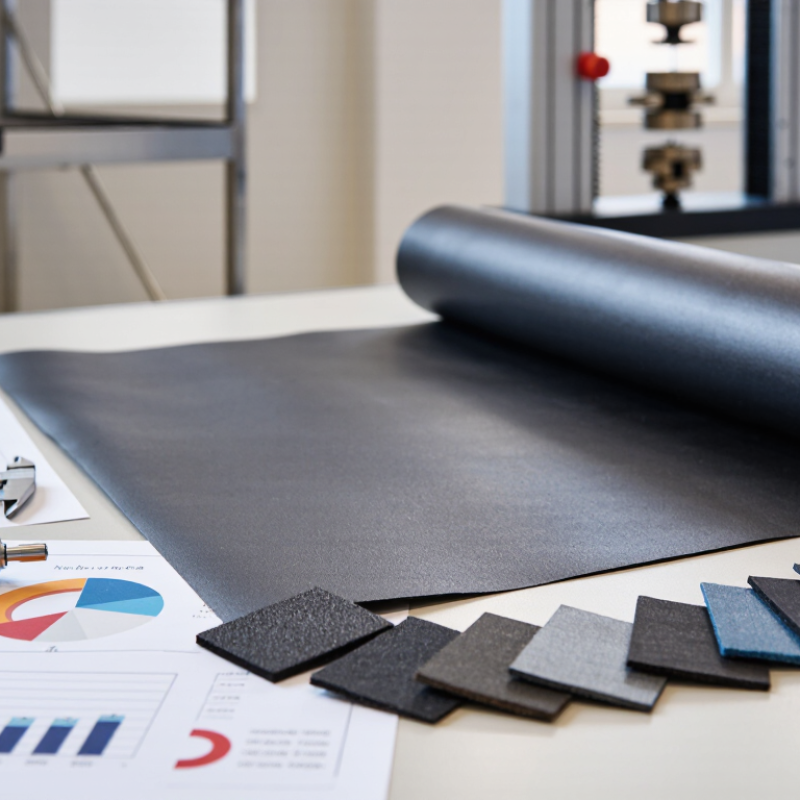
Understanding HDPE Liners and Their Industrial Applications
HDPE liners are low-permeability sheets used to contain liquids and protect soil and groundwater. Common applications include landfill base layers, mining process ponds, wastewater lagoons, and reservoirs. Their resistance to many chemicals and relatively low permeability make them useful in demanding containment systems. Still, material selection must reflect the liquid, temperature, ground conditions, and expected service life.
Demand is expanding. Grand View Research’s 2023 geomembrane market analysis valued the global market at about US$2.1 billion in 2022 and projected 5.4% annual growth from 2023 to 2030. This forecast indicates wider use, not guaranteed performance. At a project site, a sharp stone beneath the sheet or a poorly joined seam can undermine the barrier. Small defects matter.
The Geosynthetic Institute’s GRI-GM13 specification sets quality requirements for HDPE geomembranes, while ASTM test methods help evaluate properties such as tensile strength and seam performance. Buyers should review test certificates, sheet thickness, resin consistency, and installation quality—not price alone. Seams need careful welding and inspection; field testing can reveal problems before the liner is covered. No liner is maintenance-free. Exposure, settlement, and punctures still require attention.
Top 10 HDPE Liner Manufacturers in China - Understanding HDPE Liners and Their Industrial Applications
| No. | Industrial Application | Typical HDPE Liner Use | Indicative Thickness Range | Key Selection Considerations |
|---|---|---|---|---|
| 1 | Municipal solid-waste landfills | Base and side-slope barrier to limit leachate migration | 1.5–2.5 mm | Chemical compatibility, seam quality, puncture resistance, and compatibility with the composite liner system |
| 2 | Landfill closure and caps | Cover barrier that helps reduce rainwater infiltration into waste | 1.0–2.0 mm | Long-term weather exposure, slope stability, cover-soil design, and protection from installation damage |
| 3 | Heap-leach mining | Lined leach pads and process-solution ponds | 1.5–2.5 mm | Solution compatibility, high hydraulic loads, subgrade preparation, and seam integrity |
| 4 | Mine tailings facilities | Containment barriers beneath or around tailings storage areas | 1.0–2.0 mm | Foundation conditions, settlement, drainage design, chemical exposure, and site-specific risk assessment |
| 5 | Water reservoirs and ponds | Water-retaining lining for storage basins and reservoirs | 1.0–2.0 mm | Water quality requirements, ultraviolet exposure, anchoring details, and protection from sharp subgrade materials |
| 6 | Canals and irrigation channels | Barrier to reduce seepage from water conveyance channels | 0.75–1.5 mm | Channel geometry, flow conditions, subgrade smoothness, anchorage, and cover or protection requirements |
| 7 | Wastewater treatment facilities | Lining for treatment lagoons, equalization basins, and storage ponds | 1.0–2.0 mm | Wastewater chemistry, operating temperature, biological exposure, and leak-detection requirements |
| 8 | Aquaculture ponds | Pond lining to retain water and separate it from underlying soil | 0.75–1.5 mm | Aquatic-life requirements, water chemistry, UV exposure, and protection against puncture |
| 9 | Agricultural and manure-storage ponds | Containment lining for irrigation water, manure, or agricultural runoff | 0.75–1.5 mm | Stored-liquid composition, exposure conditions, soil preparation, and local environmental requirements |
| 10 | Industrial secondary containment | Containment beneath tanks, chemical storage areas, and process zones | 1.0–2.0 mm | Chemical compatibility, spill volume, exposure duration, drainage details, and applicable safety regulations |
Note: Thickness ranges are indicative examples, not design requirements or a manufacturer ranking. Actual liner thickness and properties should be selected by a qualified designer based on site conditions, stored materials, applicable regulations, and project specifications.