
10 Tips for Buying Commercial LED Lighting
Choosing Commercial Led Lighting is not just a matter of replacing old lamps. It means matching light output, color quality, controls, and installation conditions to the work happening beneath each fixture. The International Energy Agency’s 2023 analysis estimates that lighting accounts for about 15% of global electricity use and 5% of greenhouse gas emissions. That scale makes purchasing decisions worth careful review. It also makes inflated savings promises worth questioning.
The U.S. Department of Energy reports that LED products can use at least 75% less energy and last up to 25 times longer than incandescent lighting. Those comparisons offer useful context, but they do not predict a specific building’s savings. Ceiling height, operating hours, fixture layout, and maintenance access all matter. A warehouse aisle and a clinic examination room need different solutions. Even a highly efficient fixture can disappoint if its beam pattern creates glare on a monitor or leaves a loading bay dim.
Lighting researcher Dr. Mark Rea has said, “Light is the most powerful drug we have.” His observation is a reminder that lighting affects more than utility bills; it shapes visibility and the experience of a space. Before comparing quotes, buyers should check verified product data, warranties, controls compatibility, and the proposed lighting layout. Ask for measurable assumptions. Ask what happens if the controls fail. And remember: a tidy spreadsheet is not a lighting plan. These ten tips provide a practical starting point, though no checklist can replace an on-site assessment.
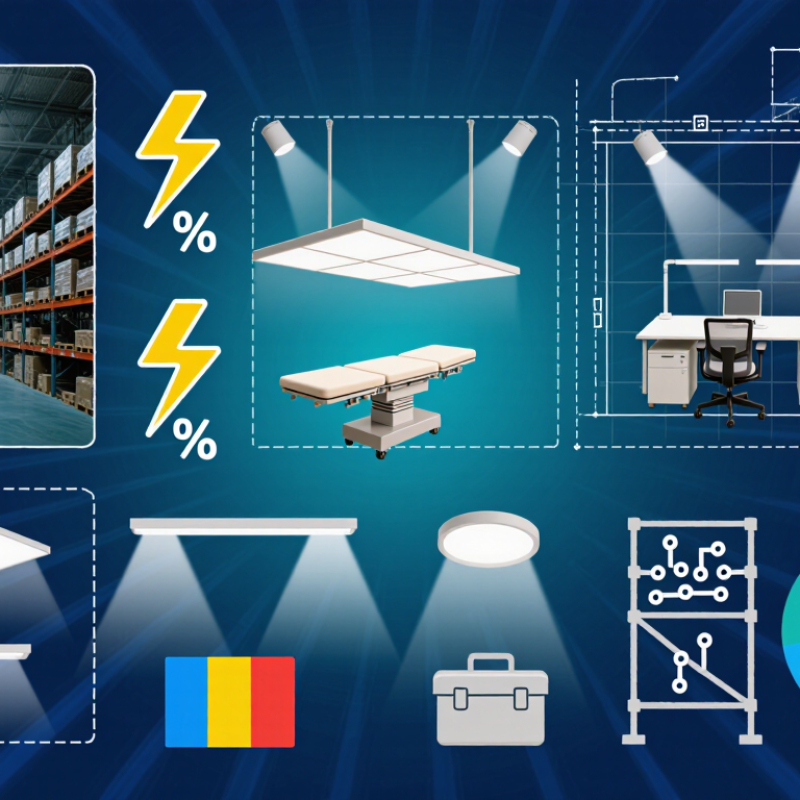
Define Lighting Needs and Site Requirements
Before comparing fixtures, walk the site during normal operating hours. Note what workers do, where they look, and which areas need steady, clear visibility. A packing bench needs focused light; an aisle may need even coverage from end to end. Small details matter. Record ceiling height, existing fixtures, available power, and any obstructions such as pipes or storage racks. A rough sketch with measurements is more useful than a guess.
Tip: Measure the work areas and mark fixture locations. Include mounting height and spacing, since both affect light levels and shadows. Check whether the space has daylight, dusty conditions, moisture, or temperature swings. These factors can influence fixture selection and placement. Do not assume one light level suits every task; compare proposed layouts with the actual work being done.
Ask staff where glare, dark corners, or frequent maintenance cause problems. Review operating hours and existing controls, too. These observations can help determine whether dimming, occupancy sensors, or separate lighting zones make sense. Request a photometric layout based on accurate site measurements, then verify the assumptions before ordering. I have seen plans look tidy on paper but miss a shelf row or a high work surface. That is an easy oversight, and an expensive one to correct later.
10 Tips for Buying Commercial LED Lighting - Define Lighting Needs and Site Requirements
| Tip | What to Assess | Useful Planning Data | Buying Consideration |
|---|---|---|---|
| 1. Identify each space’s primary use | List activities by area, such as desk work, circulation, storage, inspection, or retail display. | Typical starting points: offices often use 300–500 lux for general work areas; corridors commonly use lower levels, around 100–200 lux. Requirements vary by task and local rules. | Specify lighting by room or task rather than applying one output level throughout the building. |
| 2. Record existing light levels | Measure illuminance at the working plane at representative locations and times. | Illuminance is measured in lux (lx). Note daylight conditions, operating hours, and whether measurements are taken with existing lights on. | Use measurements and a lighting calculation to estimate the required fixture quantity and output; do not rely on wattage alone. |
| 3. Measure the site accurately | Document room length, width, ceiling height, work-plane height, and fixture mounting locations. | Include beams, shelving, partitions, skylights, and other obstructions that may affect light distribution. | Confirm that the proposed optic and mounting method suit the actual ceiling height and layout. |
| 4. Check surface reflectance and finishes | Note wall, ceiling, and floor colors, as well as glossy or reflective surfaces. | Light-colored surfaces generally reflect more light than dark surfaces; polished floors, screens, and machinery may create reflections. | Ask for a layout or simulation that considers reflectance and glare, especially in work areas with displays. |
| 5. Define the visual task and uniformity needs | Identify small text, detailed inspection, moving equipment, or areas where uneven brightness could affect visibility. | A task may need more light than its surrounding circulation area. Uniformity is assessed by comparing minimum and average illuminance across an area. | Review calculation results at the relevant work plane, not just the average room value. |
| 6. Consider glare and viewing angles | Check seated and standing sightlines, computer screens, glossy work surfaces, and high-bay applications. | Glare depends on source brightness, position, viewing direction, and room surfaces; a diffuser or suitable optic can help control it. | Request photometric information and confirm the fixture distribution is appropriate for the space. |
| 7. Select a suitable color temperature | Consider the desired appearance, the existing lighting, and the tasks performed. | Correlated color temperature (CCT) is measured in kelvin (K). Common commercial choices include 3000 K, 3500 K, 4000 K, and 5000 K. | Keep CCT consistent within visually connected areas unless the design intentionally uses different light tones. |
| 8. Match fixtures to environmental conditions | Check temperature, moisture, dust, vibration, cleaning methods, and exposure to chemicals or impact. | Ingress protection (IP) ratings describe protection against solids and water under defined test conditions; they do not cover every environmental hazard. | Choose a fixture rating and construction suitable for the documented site conditions and applicable safety requirements. |
| 9. Document controls and operating schedules | Determine where dimming, occupancy sensing, daylight response, or scheduled control is useful. | Record daily operating hours, occupancy patterns, daylight availability, and any required control zones. | Verify that fixtures, drivers, sensors, and control systems are compatible and that the control strategy meets local requirements. |
| 10. Check applicable codes and emergency needs | Identify building, electrical, energy, accessibility, and life-safety requirements for the project location. | Emergency lighting, exit signs, and required illumination levels are governed by local regulations and the building’s use. | Have the design reviewed by a qualified lighting professional or local authority before purchase and installation. |
Note: Illuminance figures are indicative planning ranges, not code requirements. Confirm project targets against the specific task, applicable standards, and local regulations.
Related Posts
-
How to Source High Quality Long Led Light Suppliers for Global Markets
-
How to Choose the Best Led Linear Lighting for Your Space?
-
Transform Your Space: Innovative Lighting Ideas for Every Room in Your Home
-

Top 10 Commercial Lighting Tips for Effective Procurement
-
Illuminate Your Space with Innovative Lighting Solutions for Global Buyers
-
What Are the Key Benefits of Choosing LED Lighting Supply for Your Business?