
What Are Night Vision Lenses and How Do They Work?

Night Vision Lenses are often described as if the glass alone lets someone see in darkness. The reality is more precise. A lens gathers and focuses available light; an image intensifier or digital sensor then helps form a view. As optical engineer Warren J. Smith’s textbook, Modern Optical Engineering, explains through its design principles, a useful plain-language paraphrase is: “A lens can direct available light, but it cannot create light that never reaches it.” This is a paraphrase, not a verified direct quotation.

In a traditional image-intensifying system, objective lenses collect faint light from the scene. The device converts incoming photons into an electronic signal, amplifies it, and displays the result through an eyepiece. Digital systems use a sensor and screen instead. Some devices also detect infrared energy, which is different from simply brightening visible light. The lens coating, focal length, and aperture can affect clarity, brightness, and field of view. Small details matter. A smudged lens, poor focus, or a bright lamp nearby can make the image less useful.

Night Vision Lenses should not be confused with yellow-tinted glasses marketed for night driving. Tint can reduce the light reaching the eye, and it does not create true night vision. That distinction deserves care. The term covers different technologies, and product claims are not always equally clear. Understanding the lens and the device behind it helps readers judge what a product can—and cannot—show in dim conditions.
What Are Night Vision Lenses and How Do They Work?

What Night Vision Lenses Are and What They Are Used For

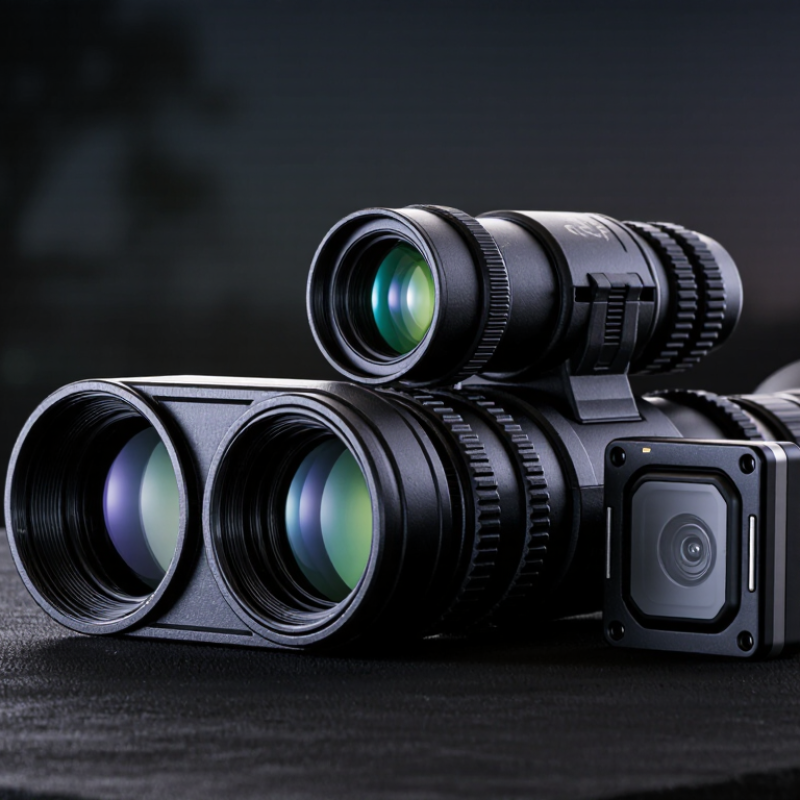
Night vision lenses are optical components designed to gather and focus faint visible light or near-infrared light. In a night-vision device, the objective lens directs incoming light toward an image intensifier or digital sensor. An eyepiece helps the user view the resulting image. The lens does not create light. That distinction matters.

These lenses are used in equipment for nighttime wildlife observation, property monitoring, navigation, and search-and-rescue work. Some systems rely on available starlight or moonlight; others use infrared illumination that people generally cannot see. Lens size and focal length affect how much light enters and how wide an area appears. A wider view can help with scanning, while greater magnification may make it harder to notice movement at the edges.

Performance depends on more than the lens. Fog, rain, dirty glass, and nearby bright lights can reduce clarity or create glare. Results vary. Also, tinted “night driving” glasses are not the same as night-vision optics, and darker lenses may reduce the light reaching your eyes. It is worth checking what a product actually does rather than relying on the label alone.

The Main Types of Night Vision Lenses

Night-vision systems use different lens-and-sensor designs, and the distinction affects what you can see. Image-intensifier lenses gather faint visible and near-infrared light, then send it to a tube that brightens the scene. Under a moonlit sky, edges and branches may appear clearly, but deep shadows can swallow detail. Performance depends on available light, lens quality, and sensor condition.

Digital night-vision lenses feed light to an electronic sensor and display the result on a screen. Some systems add near-infrared illumination, which helps in very dark rooms but may reveal the viewing area to compatible sensors.

Thermal lenses work differently: they focus infrared energy emitted by objects, showing warm bodies against cooler backgrounds. They can reveal a person behind light foliage, but not through walls or ordinary window glass. That distinction gets messy.

Grand View Research estimated the global night-vision-device market at about US$7.2 billion in 2023 and projected 8.2% annual growth through 2030. The estimate covers multiple device types; it does not measure lens clarity or low-light performance.

Compare specifications carefully. A larger sensor or higher listed resolution does not guarantee useful detail at distance. Field of view, focus range, and image performance in actual darkness matter too.

Some claims need testing.

How Night Vision Lenses Capture and Process Light

Night vision lenses do not create light; they help a camera collect what little is available. Their curved glass gathers visible light and, in compatible systems, near-infrared light. The lens focuses that light onto an image sensor. Think of a dim garden: a pale fence may still appear, while dark leaves blend together. That matters.

The sensor converts incoming photons into electrical signals. A processor then brightens those signals, adjusts contrast, and reduces some visual noise. On-screen, a weak outline can become easier to see. But brightening has limits. It may also make grain and blur more obvious, especially when the camera moves or the scene is extremely dark. A crisp-looking image can still hide missing detail; it is worth checking what remains distinguishable, not just how bright the display appears.

Tips: Hold the camera steady and allow your eyes or display settings to adjust. Check whether the device uses ambient light alone or has an infrared assist feature. Test it on familiar objects at different distances. A nearby wall may look clear while a distant sign stays unreadable, and that difference is easy to miss.

What Are Night Vision Lenses and How Do They Work?

Night vision systems gather available light—including near-infrared light—and convert it into an image. This chart compares the energy of photons at representative visible and near-infrared wavelengths.

Photon energy is calculated from E = hc/λ. Image-intensifier devices convert incoming photons into electrons, amplify them, and produce a visible image; digital systems use a sensor to convert light into electronic signals. Actual device sensitivity varies by design.

Key Components That Shape Night Vision Performance

Night-vision performance starts at the objective lens. Its aperture gathers faint light, while optical coatings reduce reflections and preserve more of the light reaching the sensor or image intensifier. A wider aperture can help in a dim field, but it may also add bulk and make focus less forgiving. Small losses matter.

The sensor or intensifier then converts available light into a visible image. Resolution describes how much fine detail it can separate; signal-to-noise ratio indicates how clearly that detail stands out from grain and flicker. The eyepiece must deliver that image comfortably, with suitable eye relief and minimal distortion. A sharp center is not enough if the edges blur.

Human vision is part of the system, too. The FAA’s Pilot’s Handbook of Aeronautical Knowledge says full dark adaptation can take about 30 minutes, so a bright exposure may undermine careful optical design. That figure is a useful reminder, not a guarantee for every person or setting. I would not judge a lens by one specification alone. Fog, stray light, focus, and tired eyes can change what appears usable. Real scenes are messy.

Factors That Affect Image Quality and Practical Use

Night-vision image quality starts with the lens, but the lens is only one part of the system. Its aperture affects how much light reaches the image sensor or intensifier. A larger aperture can help in dim conditions, though it may make precise focusing harder. Optical clarity, lens alignment, and coatings also matter. Scratches or fingerprints can scatter light and soften details. Clean glass helps.

Focus is critical. A nearby branch may look sharp while a distant path stays blurred. The lens’s field of view creates another trade-off: a wider view helps with orientation, while a narrower view can make distant objects easier to inspect. More magnification is not always better. It can exaggerate hand movement and reduce the visible scene. That trade-off is easy to miss.

Ambient light, weather, and user habits shape practical results, too. Haze, rain, and condensation reduce contrast; bright lights can overwhelm some night-vision systems. Infrared illumination may help when natural light is scarce, but it does not remove every shadow or obstacle. Allow your eyes time to adjust, keep the lens clear, and test focus at the distance you actually need. Small details matter. Even then, an image may look grainy. That is normal in very low light, not proof that the lens is defective.

What Are Night Vision Lenses and How Do They Work? - Factors That Affect Image Quality and Practical Use

Component or factor How it works Effect on image quality Practical considerations
Night-vision objective lens Collects available light and focuses it onto an image intensifier or digital sensor. The lens does not create light by itself. Lens transmission, focus, and optical quality affect brightness, sharpness, and contrast. Keep the lens clean and correctly focused; fingerprints, dust, and scratches can reduce contrast.
Image intensifier Converts incoming photons into electrons, amplifies the electron signal, then converts it back into a visible image on a phosphor screen. Performance depends on available light, signal-to-noise ratio, resolution, and the characteristics of the intensifier. Works best with some ambient light, such as moonlight or starlight. Very dark conditions may require an infrared illuminator.
Digital night-vision sensor A low-light image sensor converts light into an electronic image; some systems can also use near-infrared illumination. Sensor sensitivity, exposure time, processing, and display quality influence detail and motion clarity. Longer exposures can brighten a static scene but may blur moving subjects. Digital systems can record or display images electronically.
Thermal imaging optics Focuses infrared radiation emitted by objects onto a thermal detector. Many long-wave thermal cameras operate in the 8–14 µm band. Detector resolution, thermal contrast, focus, and the transmission of the optical material affect image detail. Thermal imaging does not require visible light. Its optics use materials suitable for infrared wavelengths; ordinary glass generally blocks long-wave infrared.
Lens aperture (f-number) The f-number describes the ratio of focal length to the effective aperture diameter. A lower f-number generally allows more light through the lens. More light can improve brightness in low-light conditions, although sharpness and depth of field also depend on lens design and focus. A larger effective aperture can help in dim scenes, but the stated f-number alone does not determine the performance of the complete device.
Focal length and field of view Focal length and sensor or intensifier size determine how much of the scene is visible and how large distant objects appear. A wider field of view covers more area; a narrower field of view makes a smaller portion of the scene appear larger. Choose a wide view for scanning and navigation, or a narrower view when observing a distant target. Magnification can make locating objects harder.
Infrared illumination An IR illuminator supplies near-infrared light that compatible intensifier or digital devices can detect. Common illuminator wavelengths include 850 nm and 940 nm. Added illumination can reveal detail in very dark scenes, but beam coverage, distance, and reflections affect the result. Near-infrared light may be visible as a faint red glow depending on wavelength and device. Check local rules and avoid shining it into eyes.
Ambient light and contrast Image-intensifier systems use available light, while digital systems may combine available light with electronic processing. Thermal systems rely on differences in infrared emission. Low light, backlighting, or weak temperature differences can reduce the distinction between a subject and its background. Moonlight, artificial lighting, weather, and the scene itself can change performance substantially. No night-vision system guarantees clear images in every condition.
Focus and depth of field Focusing adjusts the lens so objects at a chosen distance form a sharp image on the imaging plane. Incorrect focus softens fine detail. Depth of field describes the range of distances that appear acceptably sharp. Refocus when the subject distance changes. Some devices have separate objective focus and eyepiece adjustment controls.
Weather, particles, and reflections Fog, rain, dust, smoke, and moisture can scatter or absorb light; reflective surfaces may send unwanted light back toward the lens. Scattering and glare can reduce contrast and obscure details. Thermal imaging can also be affected by atmospheric conditions and surface properties. Use appropriate lens protection, avoid pointing toward bright sources, and expect reduced visibility in adverse conditions.