
What is a Miniature Circuit Breaker and How Does It Work?

A Miniature Circuit Breaker (MCB) is a crucial device in modern electrical systems. It protects circuits from overloads and short circuits. When the current exceeds a safe limit, the MCB automatically disconnects the circuit. This action prevents potential hazards like electrical fires.

The design of a Miniature Circuit Breaker is compact yet robust. It fits neatly in distribution boards, making it ideal for residential and commercial use. MCBs come in various ratings to suit different applications. Their responsiveness is significant; they act faster than fuses, providing more reliable protection. However, they can trip unexpectedly, which may confuse users. Understanding why they trip requires attention to circuit loads and appliance usage.

In summary, the Miniature Circuit Breaker serves an essential role in electrical safety. Its operation is vital for anyone dealing with electrical systems. While they offer many advantages, users must reflect on their circuit designs. Proper knowledge of MCBs can lead to safer electrical practices.
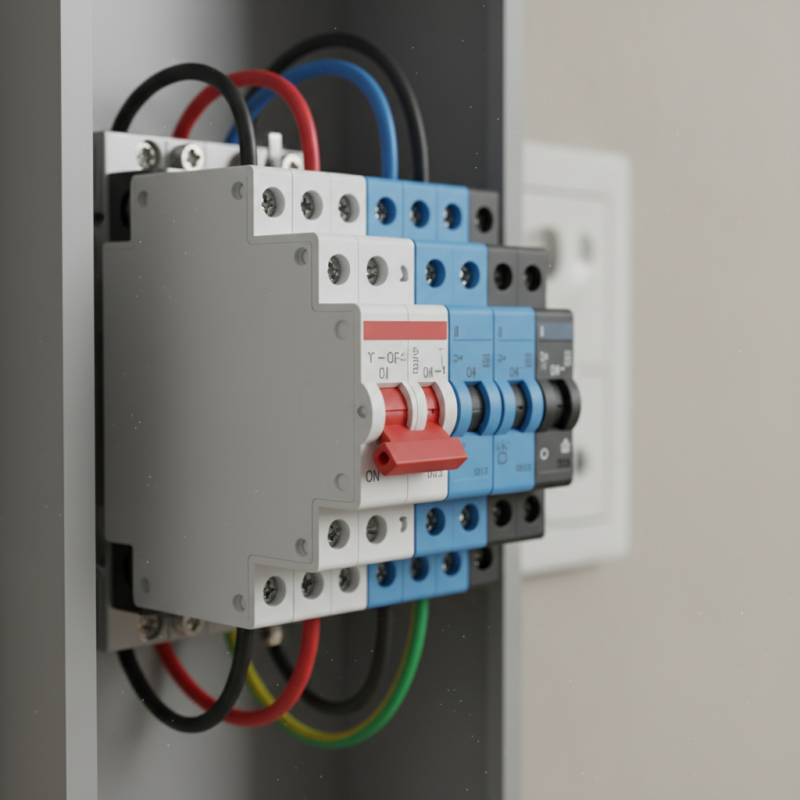
What is a Miniature Circuit Breaker and How Does It Work?

Definition of a Miniature Circuit Breaker (MCB)

A Miniature Circuit Breaker (MCB) is an essential device in modern electrical systems. It serves to protect circuits from overload and short circuits. By automatically disconnecting the circuit during fault conditions, MCBs prevent damage to electrical appliances and reduce the risk of fire.

According to industry reports, the global MCB market was valued at approximately $4.2 billion in 2020 and is projected to grow by about 5.4% annually. This growth highlights the increasing importance of MCBs in residential, commercial, and industrial sectors. An MCB typically features a series of thermal and electromagnetic mechanisms that work together. The thermal mechanism responds to overloads, while the electromagnetic mechanism triggers during short circuits. This dual operation ensures comprehensive protection.

Despite their reliability, some MCBs can fail under specific conditions. For instance, if the circuit experiences repeated, minor overloads, the MCB may become less responsive. Regular maintenance and testing are necessary to ensure optimal performance. Awareness of potential limitations in MCB technology can help users make informed decisions about electrical safety and system designs.

What is a Miniature Circuit Breaker and How Does It Work?

Feature Description
Definition A Miniature Circuit Breaker (MCB) is an electronic switch that automatically switches off electrical circuits during overload or short circuit conditions.
Functionality MCBs protect wiring and equipment from potential damage caused by electrical overloads and faults.
Operation Mechanism MCBs use a thermal mechanism for overload protection and a magnetic mechanism for short circuit protection.
Advantages They are compact, reliable, and can be reset easily after tripping, unlike traditional fuses which must be replaced.
Applications Used in residential, commercial, and industrial electrical systems for circuit protection.
Rating MCBs come in various ratings, usually ranging from 1A to 125A, depending on their application.

Components of a Miniature Circuit Breaker

A miniature circuit breaker (MCB) is a vital component in electrical systems. Understanding its parts can help us appreciate how it functions. An MCB consists of several key components: the mechanism, lever, and bimetallic strip. Each part plays a crucial role in protecting circuits from overload and short circuits.

The operating mechanism controls the action of the MCB. It can be automatic or manual. The lever allows users to turn the circuit breaker on or off. These features are essential for managing electrical flow. Meanwhile, the bimetallic strip works by bending when heated, which happens during an overload. This bending trips the circuit, stopping the flow of electricity. It’s interesting to see how these components interact to enhance safety.

While MCBs are reliable, they are not foolproof. Sometimes, they may fail to trip under specific conditions. Regular inspection can reveal potential issues. Attention to these details is important for optimal performance. Understanding the components can lead to better maintenance practices, ensuring safety in electrical systems.

How a Miniature Circuit Breaker Functions

A miniature circuit breaker (MCB) is a device that protects electrical circuits. It interrupts the flow of electricity when it detects faults. This rapid response helps prevent damage to wiring and reduces fire hazards. MCBs are compact and designed for easy installation in distribution boards.

How does it really work? The MCB uses a bi-metallic strip and an electromagnet. When current surges, the heat causes the strip to bend. This bending action trips the mechanism, disconnecting the circuit. If there's a short circuit, the electromagnet kicks in faster, cutting the power almost instantly. This two-pronged approach ensures reliable protection against various electrical faults.

Yet, MCBs are not foolproof. They can fail if overloaded continuously. Regular checks and proper installation are crucial. Sometimes, users forget to reset them after tripping. This can lead to confusion and unsafe conditions. Understanding how they function can help in maintaining safety and reliability in electrical systems.

Miniature Circuit Breaker (MCB) Ratings and Tripping Currents

This chart illustrates the relationship between the rated current and the tripping current of different miniature circuit breakers (MCBs). The x-axis represents the rated current in Amperes (A), while the y-axis shows the corresponding tripping current in Amperes (A) for type B and C MCBs.

Types of Miniature Circuit Breakers and Their Applications

Miniature Circuit Breakers (MCBs) are essential components in electrical systems. They help protect circuits from overloads and short circuits. Understanding the types of MCBs and their applications can enhance safety and efficiency in your home or workplace.

There are various types of MCBs, including B, C, and D curves. Type B MCBs trip between 3 to 5 times the rated current. They are ideal for residential applications. Type C MCBs trip between 5 to 10 times the rated current. They suit commercial environments, where equipment might draw higher currents temporarily. Type D MCBs trip above 10 times the rated current, fitting heavy industrial settings.

Tips: When installing MCBs, ensure they are rated for your specific electrical load. Check for compatibility with existing systems. Proper installation helps prevent nuisance tripping and maintains system integrity.

Another important aspect is the selection based on application. If machinery frequently starts and stops, consider a Type C MCB. However, choosing the wrong type can lead to malfunctions. Always reassess the current draw of your devices.

Tips: Regular inspections can catch issues early. Look for signs of wear or unusual tripping. Adapting your system as needs change is crucial for safety and reliability.

Advantages of Using Miniature Circuit Breakers in Electrical Systems

Miniature circuit breakers (MCBs) play a vital role in electrical systems. They protect circuits from overloads and short circuits effectively. By tripping the circuit during faults, MCBs prevent damage to wiring and connected devices. This early intervention is crucial for both safety and functionality.

Using MCBs comes with several advantages. For one, they are compact and can fit easily in electrical panels. Installation is straightforward, and maintenance is often minimal. Many users value their resettable nature. Unlike fuses, MCBs don't require replacements after a trip. Just reset the switch, and the circuit is live again.

However, there are considerations. Not all MCBs are suitable for every application. It's important to choose the right type based on the specific load and environment. Sometimes, installation errors may lead to unexpected trips. This can be frustrating for users. Reflecting on these factors ensures better performance and reliability in electrical systems.