
How to Choose the Right Storage Rack Upright?
A Storage Rack Upright may look like a simple steel column, but it carries the load of every beam, pallet, and handling decision above it. Choosing one by appearance or price alone can leave a system poorly matched to its real work. MHI and Deloitte’s 2024 Annual Industry Report found that 55% of surveyed supply-chain professionals planned to increase technology investment. That points to changing warehouse demands, though it does not measure rack safety or upright performance directly. The distinction matters.
The right upright depends on more than pallet weight. Beam height, bay width, rack configuration, floor conditions, and the way loads enter the rack all affect the selection. A bent flange near a busy aisle is not a minor detail; it can signal damage requiring qualified assessment. ANSI MH16.1 provides an engineering framework for industrial steel storage racks, including their design and testing. Still, a standard cannot replace accurate site measurements or a review of actual operating conditions. Details get missed.
A credible introduction should use a verifiable expert quotation, not a line invented for effect. No source material or independently verifiable, rack-specific quotation from a named expert was provided here, so I will not attribute one falsely. That is a limitation worth acknowledging. The practical goal remains clear: match the upright’s capacity and configuration to the loads, layout, and daily handling it will actually face.
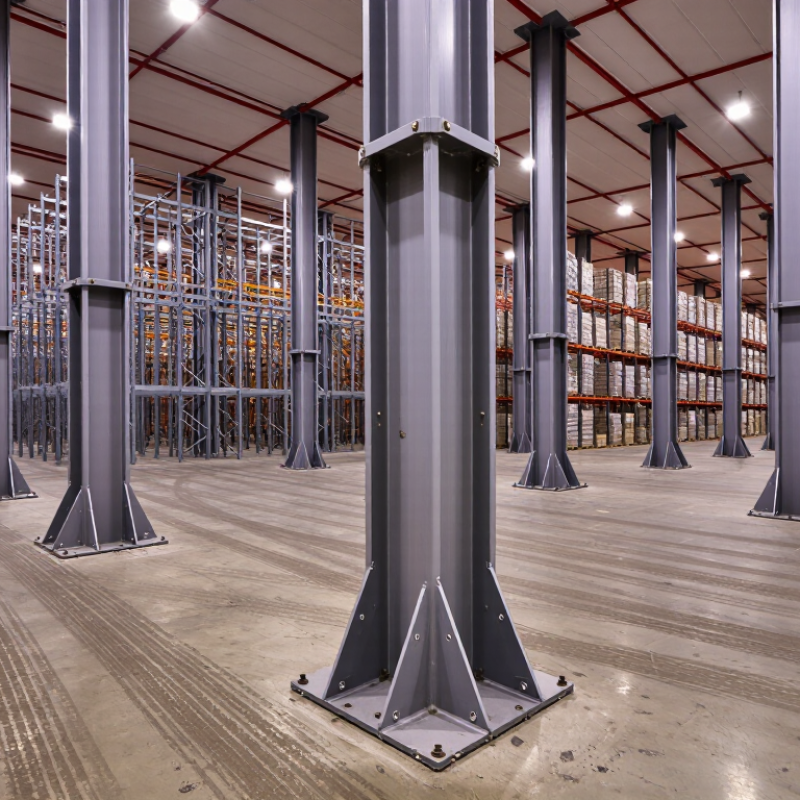
Define Storage-Rack Upright Types Using ANSI MH16.1 Design Criteria
How to Choose the Right Storage Rack Upright?
Define Storage-Rack Upright Types Using ANSI MH16.1 Design Criteria
An upright is not defined by its front profile alone. Compare roll-formed and structural-steel columns by checking their section shape, steel properties, connection details, and frame bracing. ANSI MH16.1-2023, Specification for the Design, Testing and Utilization of Industrial Steel Storage Racks, evaluates the rack system—not just the column’s nominal thickness.
That matters. A deeper frame, changed beam level, or missing brace can alter column behavior and capacity.
Read the design data before selecting an upright. Confirm the intended load, beam elevations, frame depth, anchorage, and seismic design assumptions with a qualified rack designer.
Ask for documented capacities that match the proposed configuration; do not compare two uprights by gauge alone. The Rack Manufacturers Institute’s ANSI MH16.1 criteria address design and testing, while site conditions still shape the final choice.
Risk deserves attention.
The U.S. Bureau of Labor Statistics reported 4.8 recordable injury and illness cases per 100 full-time workers in warehousing and storage in 2022. This sector-wide figure is not a rack-failure rate, but it underlines why installation and inspection details matter.
Check baseplates, anchors, beam connectors, and visible column bends after impacts.
One limitation remains: a catalog rating cannot confirm that an altered, damaged, or unevenly loaded rack is safe.
Calculate Pallet, Beam, and Bay Loads Before Checking Upright Capacity
How to Choose the Right Storage Rack Upright?
Calculate the load path before comparing upright capacities. Start with the heaviest pallet, including its packaging, then multiply by the number of pallets on each beam level. For example, four 800 kg pallets create a 3,200 kg load on that beam pair. Two equally loaded levels add up to 6,400 kg per bay, before beam and rack self-weight. These figures are a worked example, not a safe working limit. ANSI/RMI MH16.1-2023 explains that rack design depends on the actual configuration and applied loads. Upright capacity can change with frame height, bracing, and beam elevations. A taller frame may carry less than a shorter one. Easy to miss.
Tips: Record pallet weight, beam-level load, and total bay load separately. Check whether the rack supplier’s capacity data match your frame depth, height, and bracing. Then confirm the load distribution across both uprights; do not assume every setup splits weight perfectly in half. Odd pallet sizes and uneven placement complicate the estimate. They deserve a second look. Have a qualified rack designer verify the final configuration against the applicable standard before installation or changes.
Match Upright Height and Depth to Pallet Dimensions and Clearances
How to Choose the Right Storage Rack Upright?
Match Upright Height and Depth to Pallet Dimensions and Clearances
Choose upright height from the loaded pallet, not the empty pallet alone. Include the load’s height, any overhang, beam levels, and required clearance above each load. ISO 6780:2003 specifies six principal flat-pallet sizes, including 1,200 × 1,000 mm and 1,200 × 800 mm. These footprints are useful starting points, not a substitute for measuring the actual load. A leaning carton or uneven stack can change the usable dimensions.
Set frame depth and beam spacing to suit pallet orientation and support points. Check how far the pallet extends beyond the beams, and confirm that its base is adequately supported under the rack designer’s specifications. Also measure clearances around sprinklers, lights, doors, and ceiling obstructions. There is no safe universal clearance figure; site conditions and the approved fire-protection design matter. A few millimetres can matter. It is easy to measure the pallet and forget the wrapped load.
Tips: Measure several loaded pallets, including the tallest and widest. Record dimensions in millimetres, then have a qualified rack designer verify upright height, depth, and load capacity against the layout. Recheck after changing pallet types or storage levels.
Assess Seismic Forces Using the Applicable ASCE/SEI 7 Requirements
How to Choose the Right Storage Rack Upright?
Assess Seismic Forces Using the Applicable ASCE/SEI 7 Requirements
A rack upright must resist more than the weight of stored pallets. During an earthquake, the rack’s height, loaded mass, beam connections, and floor anchorage all affect its response. Start with the locally adopted ASCE/SEI 7 edition and confirm its provisions for steel storage racks. Requirements can differ by jurisdiction.
Establish the site’s seismic inputs before comparing upright sizes. These include mapped spectral accelerations Ss and S1, site class, and design values SDS and SD1. Also verify the rack’s risk category, importance factor, and seismic force-resisting system with a qualified structural engineer. Small changes in stored load can shift the force demand. A partly loaded bay is not always the safer case.
NIST’s report Seismic Design of Steel Storage Racks (GCR 17-917-44) examines rack behavior and design considerations; use it alongside the applicable code, not as a substitute. FEMA’s 2019 Mitigation Saves report estimates that mitigation measures provide about $6 in avoided future losses per $1 invested, across hazards. That figure is not a rack-specific return, but it reinforces why anchorage and bracing deserve careful review. Inspect base plates, anchor details, and slab conditions in the field. Drawings can miss cracked concrete or uneven floors.
Verify Rack Stability, Load Ratings, and Safe Stacking Under OSHA 1910.176(b)
How to Choose the Right Storage Rack Upright?
A rack upright is only one part of a stable storage system. Check the full bay: frame height, beam span, floor condition, pallet dimensions, and the heaviest expected load. Ask the rack supplier or a qualified engineer to verify capacity for that exact configuration. Compare the rating with the load on each beam level, not just the upright’s appearance. OSHA 1910.176(b) requires stored materials to remain stable and secure against sliding or collapse. A neat-looking bay can still hide a loose connector. Looks can mislead.
The Bureau of Labor Statistics’ 2023 Survey of Occupational Injuries and Illnesses reported a total recordable case rate of 4.8 per 100 full-time workers in warehousing and storage. This figure covers the industry, not rack failures alone, but it underlines why routine checks matter. Inspect uprights for dents, leaning, damaged baseplates, and missing anchors; mark damaged areas and keep loads away until they are assessed. Stack pallets squarely, keep loads within beam limits, and avoid placing unstable loads high. Recheck after a forklift impact or layout change. Even careful inspections can miss hidden damage, so uncertain capacity deserves a qualified review.