
Best Switching Power Supply Types for Optimal Performance?
Switching Power Supplies (SPS) have become vital in various industries due to their efficiency and compact design. According to a recent report by MarketsandMarkets, the global power supply market is expected to reach $40.6 billion by 2025. This growth highlights the need for reliable and efficient power solutions in everything from consumer electronics to industrial applications.
With a wide variety of SPS types available, selecting the optimal one can be challenging. These supplies convert electrical power efficiently, offering high performance in diverse conditions. However, imperfections can arise in applications, leading to concerns over heat management and electromagnetic interference. The industry needs more focus on these potential flaws and their impact on performance.
As technology advances, the demand for improved Switching Power Supply solutions continues to rise. It is crucial for engineers and designers to stay informed about the latest developments. A well-chosen SPS can enhance system reliability and energy efficiency, contributing significantly to overall product performance.
Overview of Switching Power Supply Types
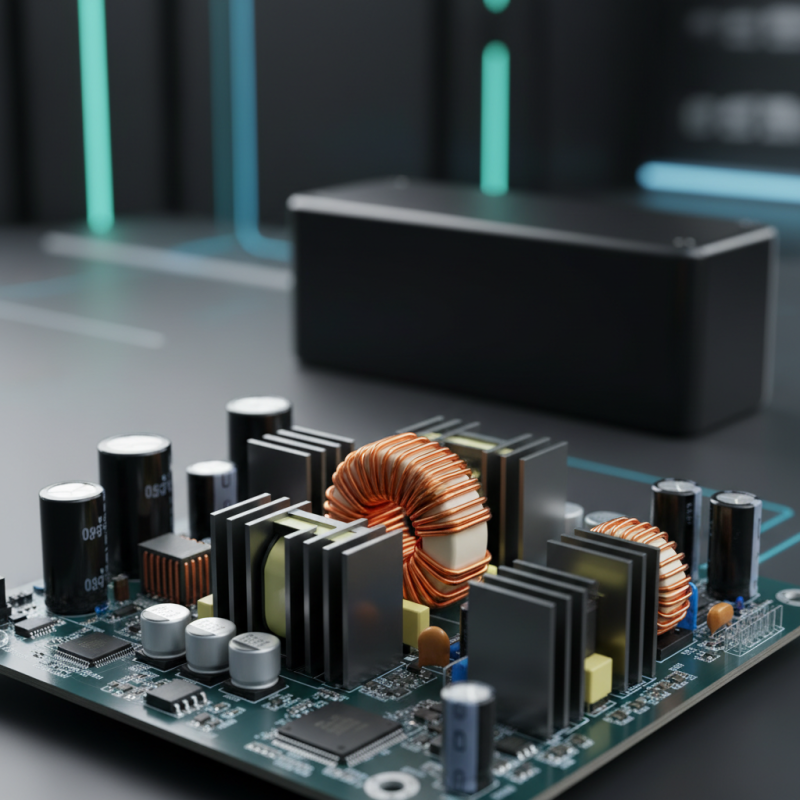
Switching power supplies (SPS) play a vital role in modern electronics. They efficiently convert electrical power to meet various operational needs. The energy efficiency of these devices can reach over 90%, significantly reducing energy wastage. According to a report by the International Energy Agency, adopting efficient SPS can cut electricity use in data centers by 30%.
There are several types of switching power supplies. The most common are buck, boost, and flyback converters. Buck converters reduce voltage, making them ideal for battery-powered devices. Boost converters increase voltage, useful for portable electronics. Flyback converters are versatile, often used in desktop chargers and power adapters. Each type has its trade-offs. For instance, while flyback converters are efficient, they can introduce noise that affects sensitive circuits.
Choosing the right type involves understanding your application needs. Some technologies might seem superior on the surface but could introduce complications. For instance, high-frequency designs save space but may require robust cooling solutions. This balancing act is crucial for optimal performance. Decisions should not be rushed; testing different configurations could lead to better reliability and efficiency.
Key Features of Different Switching Power Supplies
When selecting a switching power supply, key features make a difference. Efficiency is crucial. Many designs achieve over 90% efficiency, which minimizes heat loss and energy waste. However, achieving high efficiency often requires careful component selection. This can be challenging for less experienced designers.
Next, consider the output voltage range. Some supplies offer wide voltage ranges. This flexibility makes them suitable for various applications. Yet, a wide range often complicates the design. Maintaining stability at all voltage levels can be tough. Designers must ensure that voltage regulation remains tight across different loads.
Another important feature is load regulation. A good switching power supply should maintain consistent voltage levels. It must adapt quickly to changes in load without significant voltage drop. However, this can lead to performance trade-offs. Advanced control circuits may be needed, increasing complexity. This doesn’t always guarantee better performance, thus requiring thoughtful consideration from designers.
Best Switching Power Supply Types for Optimal Performance
| Type | Efficiency (%) | Voltage Range (V) | Max Power Output (W) | Key Features |
|---|---|---|---|---|
| Flyback Converter | 75-90 | 85-265 | 100 | Cost-effective, simple design |
| Half-Bridge Converter | 80-95 | 30-400 | 500 | High efficiency, compact size |
| Full-Bridge Converter | 85-97 | 100-480 | 1000 | High power, excellent thermal performance |
| Forward Converter | 78-92 | 15-400 | 300 | Simple control, small footprint |
| resonant Converter | 90-98 | 40-350 | 600 | Low electromagnetic interference, high efficiency |
Comparative Analysis of Performance Metrics
When choosing a switching power supply, performance metrics play a crucial role. Efficiency, voltage regulation, and thermal management are key parameters to consider. High efficiency means lower energy consumption. Devices that run cooler tend to have a longer lifespan.
It's vital to compare different types. For example, the flyback topology offers simplicity and low cost, but may have less efficiency in high-power applications. On the other hand, a full-bridge design typically excels in performance but incurs added complexity. Users must weigh their specific needs against these attributes.
Tips: Always check the efficiency rating. Aim for supplies above 80%. Test under real-world loads. Don’t overlook thermal management; fans may be necessary for high-output setups.
Balancing these metrics can be challenging. Often, you might find a supply that meets some needs but falls short in others. Reflection is essential. Analyze your application and anticipate future demands. By thoroughly investigating each option, you can improve overall performance and reliability in your system.
Applications and Use Cases for Various Power Supplies
Switching power supplies are essential in various applications, from consumer electronics to industrial machinery. Their efficiency and compact design make them popular. According to industry reports, these supplies can achieve up to 90% efficiency under optimal conditions. This efficiency is crucial for reducing energy costs and minimizing heat generation.
In many scenarios, such as data centers and telecommunications, reliability is key. The average failure rate for standard power supplies can be as high as 10%. In contrast, high-quality switching power supplies often exhibit a failure rate of less than 1%. This difference can impact the overall performance of systems relying on stable power sources.
Tip: When choosing a power supply, consider the load requirements. Overestimating can lead to wasted energy.
Additionally, medical devices require strict standards for safety and performance. The power supply must meet regulations like UL or IEC. Applications in this field often require power supplies that can handle variances in input voltage and provide stable outputs.
Tip: Always review the specifications to ensure adequacy. Small details can lead to significant issues.
Best Practices for Selecting an Optimal Power Supply
When selecting a power supply, several factors come into play. Efficiency is crucial. A report by the International Energy Agency states that power supplies can waste 15-20% of energy. Choosing an efficient model can reduce this waste, saving energy and costs. Look for units with high efficiency ratings. These often exceed 80% efficiency under loads.
Another consideration is load regulation. The power supply should maintain constant voltage despite fluctuations. Poor load regulation can lead to system instability. Studies show that sensitive components fail more often due to voltage variations. Understanding tolerance levels helps mitigate risks.
Thermal management also plays a key role. Overheating can shorten the lifespan of a power supply. According to industry data, a decrease in temperature by just 10°C can double its lifespan. Regular inspection of cooling systems and adequate airflow are essential. It’s often overlooked but critical for long-term reliability. Balancing these aspects enhances overall performance and ensures longevity.