
Why Choose a Remote Control Actuator?
A Remote Control Actuator lets an operator move a valve, hatch, louver, or other mechanism without standing beside it. Depending on its design, it may use electric, pneumatic, or hydraulic power. A signal travels from a switch, controller, or connected system, and the actuator converts that command into motion. The practical benefit is easy to picture: a technician can adjust a hard-to-reach damper from a control panel instead of climbing to it. That can improve convenience and help keep routine operation consistent. Small details matter.
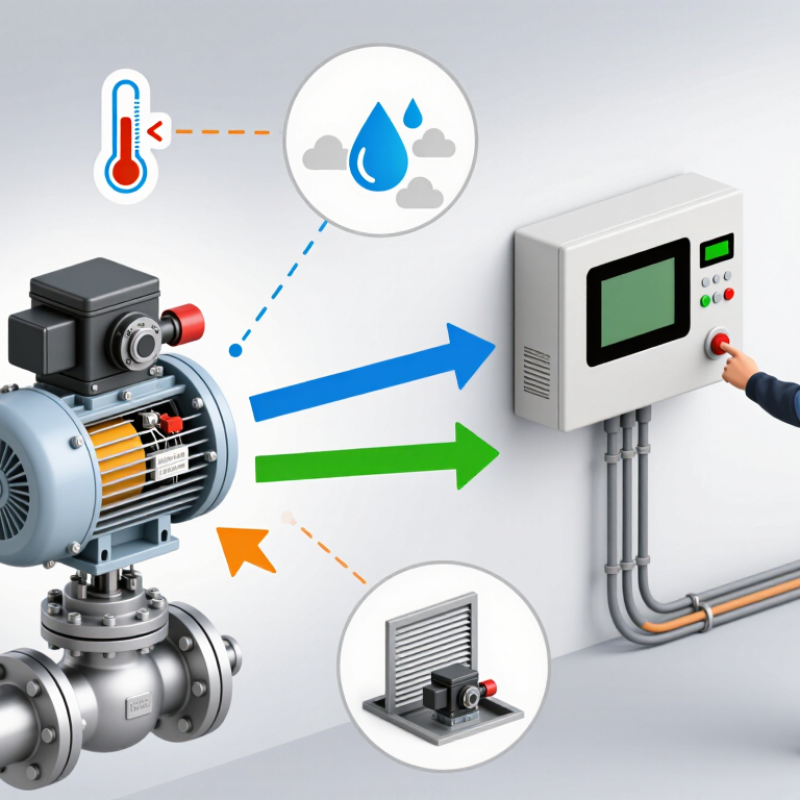
Choosing one takes more than matching a product name to an application. Consider required force, travel, operating speed, power supply, duty cycle, mounting space, and the environment around the equipment. A unit exposed to moisture, dust, or temperature changes may need suitable protection, while a safety-critical process may call for feedback, manual override, or a defined fail position. Check the manufacturer’s specifications and installation guidance before deciding. Compatibility is not automatic. Remote operation also does not remove the need for inspection or maintenance. In some setups, wiring, controls, or commissioning can take more effort than expected. This guide explains where a Remote Control Actuator can be useful, what to compare, and which trade-offs deserve a closer look. The right choice depends on the mechanism, the operating conditions, and the people who will maintain it.
What a Remote Control Actuator Is
A remote control actuator is a device that turns electrical, hydraulic, or pneumatic power into movement. It may push, pull, lift, tilt, or rotate a connected part. “Remote control” describes how the movement is commanded; it does not define the actuator’s motion. A wall switch, handheld transmitter, or control system sends a signal, and the actuator moves a rod or shaft. Linear models travel in a straight line. Rotary models turn around an axis. That distinction matters.
In practical use, remote operation can make an awkward or hard-to-reach adjustment easier. Picture a vent opening above a workbench: an actuator can move it without someone climbing up to reach it. The right model depends on the load, travel distance, speed, available power, and operating conditions. Check how the actuator attaches to the moving part, too. A mismatch may cause wobbling, excess strain, or unreliable movement. I’ve found that a small mounting detail can matter more than expected.
Tips: Measure the required travel and load before selecting an actuator. Check the control method and power supply, then test the full movement under realistic conditions. Keep wiring and moving parts clear. If the movement feels rough, stop and inspect the setup; forcing it can hide a problem.
How Remote Control Actuators Operate
Why Choose a Remote Control Actuator?
How Remote Control Actuators Operate
A remote control actuator moves a mechanism after receiving a command from a handheld controller, wall switch, or automation system. The signal reaches a receiver or motor driver, which supplies power to the actuator. Inside, an electric motor turns gears or a lead screw. That rotation becomes controlled linear movement, pushing or pulling a panel, vent, hatch, or adjustable fixture. Small changes matter.
When the actuator reaches its travel limit, internal limit switches may stop the motor. Some systems also report position through sensors, while simpler models only move between endpoints. The exact behavior depends on wiring, load, stroke, and duty cycle. Keep hands clear. A unit can stall if the attached part binds or exceeds its rated force. In practice, diagrams look cleaner than installations; cable routing can still surprise you.
Tips: Match the actuator’s force and stroke to the real load, not an estimate. Test movement without a full load, then check mounting points, voltage, and travel limits. If movement is uneven, stop and inspect alignment before trying again.
Key Benefits of Remote Control Actuators
Why Choose a Remote Control Actuator?
Key Benefits of Remote Control Actuators
Remote control actuators let operators move valves, dampers, or access panels without reaching into tight or hazardous spaces. That can reduce awkward manual handling and keep staff farther from hot surfaces or moving machinery. Control can also improve repeatability: a damper can return to a marked position instead of relying on a rough hand adjustment. Small difference, especially across repeated shifts.
Automation is expanding, though actuator-specific gains depend on the application. The International Federation of Robotics reported 4,281,585 industrial robots operating worldwide in 2023 in its World Robotics 2024 report. This is broader than actuator use, but it shows how remotely managed motion is becoming part of modern industrial work. For facility teams, remote actuation can simplify operation across distant equipment and support faster response when a process changes. It still needs correct sizing, reliable power, and a manual or fail-safe plan. Remote is not automatically better; poor setup can create a new point of failure.
Tips: Check the actuator’s load, stroke, duty cycle, and environmental rating before installation. Test limit settings under real operating conditions, not only on the workbench. Keep access for inspection.
Why Choose a Remote Control Actuator? - Key Benefits of Remote Control Actuators
| Benefit | What It Enables | Typical Application | Practical Consideration |
|---|---|---|---|
| Remote operation | Moves a connected mechanism without requiring the operator to reach the actuator directly. | Adjusting equipment behind a guard, inside an enclosure, or at an inconvenient location. | Control range depends on the control method, installation, and surrounding conditions. |
| Improved operator access | Allows controls to be placed at a more accessible operating position. | Opening or closing vents, panels, valves, or adjustable fixtures. | Remote control does not replace appropriate guarding or safe operating procedures. |
| Repeatable movement | Provides consistent movement when used with suitable limit switches, position feedback, or a controller. | Repeatedly positioning a hatch, lift, access panel, or adjustable work surface. | Position accuracy depends on the actuator, feedback system, load, and control setup. |
| Integration with automation | Can be operated through compatible switches, control systems, or automation equipment. | Automated machinery, building systems, and equipment with coordinated movement. | Confirm that the actuator’s voltage, wiring, control signals, and duty cycle suit the system. |
| Reduced manual effort | Uses electrical, pneumatic, or hydraulic power to move a load instead of relying solely on manual force. | Frequently adjusted equipment or mechanisms that are difficult to move by hand. | Select an actuator with suitable force, stroke, speed, and operating duty for the application. |
| Flexible control options | Depending on the design, supports wired controls or compatible wireless control arrangements. | Installations where control placement or cable routing affects usability. | Wireless systems require compatible components and consideration of signal interference and power. |
| Potential for safer separation | Can let an operator control movement from a position away from the moving mechanism. | Adjusting equipment where direct access during movement is undesirable. | Risk assessment, emergency stopping, interlocks, and visibility requirements depend on the machinery. |
Actual performance and available features vary by actuator type, controller, installation, and load. Check the product specifications and application requirements before selection.
Where Remote Control Actuators Are Used
Why Choose a Remote Control Actuator?
Where Remote Control Actuators Are Used
Remote control actuators are useful wherever a mechanism sits out of easy reach or needs repeatable movement. In buildings, they open HVAC dampers, adjust blinds, and operate ventilation windows. A technician can change airflow without climbing to a ceiling-mounted unit. On factory lines, actuators position guards, valves, and machine fixtures. They also appear in adjustable beds, vehicle seats, and agricultural equipment. Small movements matter.
Tips: Match the actuator’s force, stroke, and duty cycle to the job. Check whether it must hold position during a power loss. A damp, dusty setting may need a suitable enclosure. It is easy to focus on remote range and overlook wiring access.
The International Energy Agency estimates that buildings use about 30% of global final energy and produce 26% of energy-related emissions. Those figures help explain why controllable ventilation and shading matter, though an actuator alone does not guarantee energy savings. The International Federation of Robotics reported 4.28 million industrial robots operating in factories worldwide in 2023. That wider automation context includes many systems that rely on controlled mechanical motion. A practical choice still depends on the load, environment, and maintenance plan. Details are sometimes less tidy than a product specification suggests.
How to Choose the Right Remote Control Actuator
Why Choose a Remote Control Actuator?
How to Choose the Right Remote Control Actuator
Start with the job, not the product label. What must the actuator move, and how far? For a linear model, measure the required stroke and estimate the load, including friction and any off-center force. For a rotary model, check the rotation angle and torque. Add a sensible safety margin, but avoid oversizing; excess force can stress hinges, brackets, and the driven equipment.
Speed matters, but so does duty cycle. A unit that moves quickly may need longer rest periods between operations. Check how often it will run, how long each movement lasts, and whether the power supply can handle startup demand. Small details count. A 24-volt supply, for example, must match the actuator’s rating and wiring arrangement. Also consider mounting space, cable length, dust, moisture, and temperature.
Control needs can change the choice. Basic systems may need only extend and retract commands, while automated setups may benefit from position feedback or limit switches. Decide what should happen if power fails, and check whether manual release is necessary. Test the actuator with the actual load and mounting points when possible. A clean bench test can be misleading. I would also revisit the force estimate; it is easy to trust a rough measurement too much.